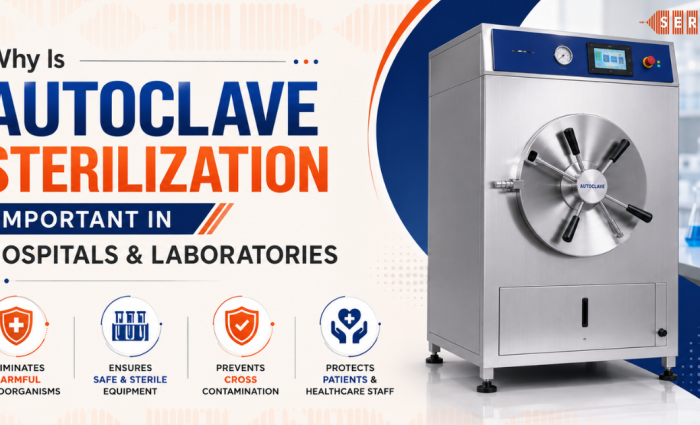
Sterilization is one of the most critical processes in healthcare and laboratory environments. Whether it is a hospital surgical instrument, laboratory glassware, culture media, or research equipment, maintaining a sterile environment is essential to prevent contamination, ensure safety, and comply with regulatory standards. As healthcare facilities and laboratories continue to prioritize safety and compliance, autoclave sterilization remains one of the most trusted and effective sterilization methods available today.
Choosing a trusted Autoclave Sterilizer Manufacturer is equally important, as equipment quality directly influences sterilization performance, operational safety, and long-term reliability. This article explores why autoclave sterilization is essential for hospitals and laboratories, how it works, its benefits, and the factors to consider when selecting the right sterilization solution.
Role of Sterilization in Healthcare and Laboratory Environments
Hospitals and laboratories handle materials that may contain harmful microorganisms capable of causing infections and contamination. Medical instruments, laboratory equipment, biological samples, and research materials can become sources of microbial growth if not properly sterilized.
In healthcare facilities, inadequate sterilization may contribute to the spread of infections among patients and healthcare professionals. Similarly, in laboratories, contaminated instruments or samples can compromise testing accuracy and research outcomes.
The Impact of Improper Sterilization
Regulatory authorities across healthcare, pharmaceutical, and research sectors require strict sterilization protocols to ensure safety and quality standards. Failure to comply with sterilization requirements can result in inaccurate results, compromised patient care, legal liabilities, and reputational damage.
This is why many organizations invest in high-quality laboratory sterilization equipment supplied by experienced autoclave manufacturers to maintain operational integrity and regulatory compliance.
The Value of Effective Sterilization
Reliable sterilization systems help organizations establish consistent processes that reduce contamination risks while improving productivity. Advanced autoclaves offer precise temperature control, pressure monitoring, automated cycles, and enhanced safety mechanisms that ensure effective sterilization every time.
What Is Autoclave Sterilization and How Does It Work?
Autoclave sterilization is a process that uses saturated steam under pressure to destroy microorganisms. The combination of high temperature and pressure enables steam to penetrate surfaces and materials more effectively than many alternative sterilization methods.
Modern autoclaves typically operate at temperatures ranging from 121°C to 134°C with controlled pressure levels, ensuring effective microbial elimination.
Autoclave Sterilization Process Explained
The sterilization cycle generally involves several stages:
- Air removal from the chamber
- Introduction of high-pressure steam
- Exposure to sterilization temperature
- Holding period for microbial destruction
- Controlled cooling and drying
These stages work together to eliminate bacteria, viruses, fungi, and resistant spores from instruments and materials.
How Autoclaves Eliminate Microorganisms
High-pressure steam disrupts cellular structures and denatures proteins within microorganisms. This process effectively destroys pathogens that may survive conventional cleaning methods, making autoclaves a preferred choice for healthcare and laboratory sterilization.
For this reason, partnering with an experienced Autoclave Sterilizer Manufacturer ensures access to equipment designed for consistent and dependable sterilization performance.
Why Hospitals Rely on Autoclave Sterilization
Preventing Hospital-Acquired Infections (HAIs)
Hospital-acquired infections remain a significant concern worldwide. Surgical tools, medical devices, and reusable equipment must be sterilized thoroughly to prevent the transmission of infectious microorganisms.
Advanced autoclave systems help healthcare facilities maintain strict infection-control protocols and improve patient outcomes.
Ensuring Safe Surgical and Medical Procedures
Sterile instruments are essential for surgeries, diagnostic procedures, and patient care activities. Effective sterilization minimizes the risk of post-operative infections and supports safe medical practices.
Many healthcare organizations depend on reputable autoclave suppliers and trusted autoclave machine manufacturers to ensure the highest standards of sterilization.
Supporting Patient Safety
Healthcare accreditation bodies and regulatory agencies emphasize sterilization as a fundamental requirement. Reliable autoclaves help hospitals meet these standards while protecting patients, staff, and visitors from preventable infections.
Why Autoclave Sterilization Is Essential for Laboratories
Preventing Sample Contamination
Laboratories frequently handle biological specimens, microbial cultures, chemicals, and sensitive materials. Contaminated equipment can compromise experiments and affect result accuracy.
Effective laboratory sterilization equipment ensures that instruments remain free from unwanted microorganisms.
Accurate Testing and Research Results
Research and testing depend on precision. Even small contamination incidents can invalidate experiments and delay projects. Autoclave sterilization helps maintain the integrity of scientific processes and laboratory operations.
Leading autoclave manufacturing companies understand these requirements and design systems capable of supporting diverse laboratory applications.
Safe Handling of Biohazardous Materials
Many laboratories generate biohazardous waste that requires proper sterilization before disposal. Autoclaves provide a safe and effective method for decontaminating waste materials, reducing environmental and occupational risks.
Key Benefits of Modern Autoclave Sterilization Systems
Superior Sterilization Efficiency
Autoclaves offer one of the most reliable sterilization methods available today. Their ability to eliminate a broad spectrum of microorganisms makes them indispensable across healthcare and research sectors.
Enhanced Operational Safety
Modern systems include advanced safety features such as pressure monitoring, temperature controls, automatic shutdown mechanisms, and secure door-locking systems.
These features protect operators while ensuring consistent sterilization performance.
Improved Productivity and Process Reliability
Automated sterilization cycles reduce manual intervention and improve operational efficiency. Facilities can process larger volumes of instruments and materials while maintaining high standards of cleanliness.
Many autoclave manufacturers now incorporate digital controls and programmable cycles to optimize workflow management.
Energy-Efficient and Cost-Effective Performance
Contemporary autoclaves are designed to maximize energy efficiency while minimizing operational costs. Reduced cycle times and efficient steam generation contribute to long-term savings without compromising sterilization quality.
Choosing a dependable Autoclave Sterilizer Manufacturer can significantly improve operational performance and return on investment.
Types of Autoclaves and Their Applications
| Autoclave Type | Applications | Key Benefits |
| Vertical Autoclave | Laboratories, research centers, educational institutions, microbiology labs | Compact design, space-saving, ideal for sterilizing glassware, culture media, and small equipment loads |
| Horizontal Autoclave | Hospitals, pharmaceutical industries, industrial facilities | High-capacity sterilization, easy loading, faster processing, suitable for large-volume operations |
Choosing the Right Autoclave for Your Application
The selection of an autoclave depends on several factors, including load capacity, application requirements, available space, automation preferences, and compliance standards, which is given in the table.
Consulting experienced industrial autoclave manufacturers can help organizations identify the most suitable solution.
Factors to Consider When Choosing an Autoclave Sterilizer Manufacturer
Product Quality and Manufacturing Standards
The reliability of sterilization equipment depends heavily on manufacturing quality. Organizations should evaluate material construction, engineering standards, and product durability before investing.
Safety and Compliance Requirements
Advanced safety systems help prevent accidents and ensure regulatory compliance. Features such as automatic pressure release, secure locking systems, and digital monitoring should be considered essential.
Technical Support and After-Sales Service
Responsive technical support and maintenance services contribute significantly to equipment longevity and performance. Established autoclave suppliers often provide installation, training, and service support.
Capacity, Customization, and Operational Efficiency
Facilities have varying sterilization requirements. Reputable autoclave manufacturing companies and experienced industrial autoclave manufacturers offer multiple capacity options and customization capabilities to meet specific operational needs.
Why Servo Enterprises Is a Trusted Autoclave Sterilizer Manufacturer in India
Servo Enterprises has established itself as a reliable Autoclave Sterilizer Manufacturer serving hospitals, laboratories, research institutions, pharmaceutical facilities, and industrial sectors. We offer advanced sterilization solutions designed to deliver consistent performance, safety, and operational efficiency.
Our product portfolio includes both vertical autoclave and horizontal autoclave systems engineered for diverse sterilization applications. Built with durable construction, advanced controls, and improved safety features, these systems help organizations achieve dependable sterilization results.
As one of the trusted autoclave machine manufacturers and recognized industrial autoclave manufacturers, Servo Enterprises focuses on delivering quality-driven solutions that support regulatory compliance and long-term operational reliability.
Final Words
Effective sterilization is essential for ensuring safety, accuracy, and regulatory compliance across hospitals, laboratories, and research facilities. Autoclave sterilization provides a reliable solution for eliminating harmful microorganisms, reducing contamination risks, and maintaining operational efficiency..
When selecting an Autoclave Sterilizer Manufacturer, it is essential to prioritize quality, safety, efficiency, and long-term performance. By partnering with Servo Enterprises, one of the established industrial autoclave manufacturers, organizations can strengthen their sterilization processes while meeting the highest standards of hygiene and compliance.
Looking for reliable autoclave manufacturers in India? Servo Enterprises provides high-performance vertical, horizontal, and industrial autoclave sterilizers for hospitals, laboratories, pharmaceutical, and industrial applications.
Frequently Asked Questions(FAQs)
1: What is an autoclave used for?
An autoclave is used to sterilize medical instruments, laboratory equipment, glassware, and other materials using high-pressure steam.
2: Why is autoclave sterilization important in hospitals?
It helps prevent infections by eliminating harmful microorganisms from surgical tools and medical equipment.
3: How does an autoclave sterilize equipment?
An autoclave uses pressurized steam at high temperatures to destroy bacteria, viruses, fungi, and spores.
4: What is the difference between a vertical and horizontal autoclave?
Vertical autoclaves are ideal for laboratories and smaller loads, while horizontal autoclaves are designed for high-capacity hospital and industrial applications.
5: How do I choose the right autoclave sterilizer manufacturer?
Look for a manufacturer that offers quality equipment, advanced safety features, regulatory compliance, and reliable after-sales support.